The management of elevated inpatient blood pressure (BP) requires a structured approach to ensure patient safety and effective care. It involves accurate BP measurement, assessing the severity of the elevation, evaluating for target-organ damage, addressing underlying causes, and carefully balancing the risks and benefits of initiating antihypertensive treatment. Using structured acronyms such as A-I-M (Assess, Identify, Modify) for inpatient management and A-I-M (Arrange, Inform, Monitor) for post-discharge care provides a practical framework.
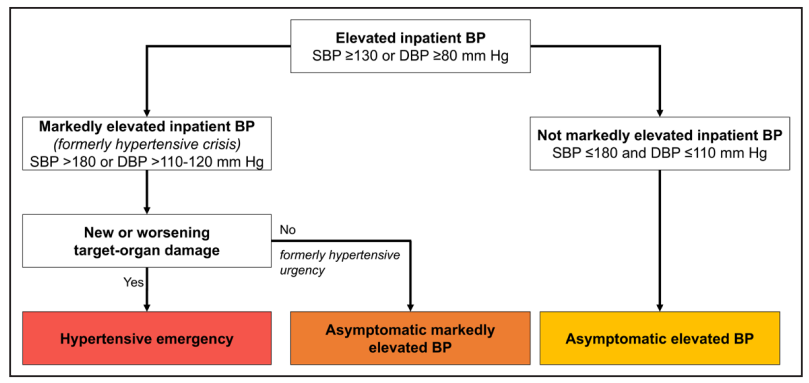
Terminology of elevated inpatient BP in the acute care setting.
Proper differentiation between hypertensive emergencies and asymptomatic elevated BP is critical, as each scenario demands distinct evaluation and treatment strategies.
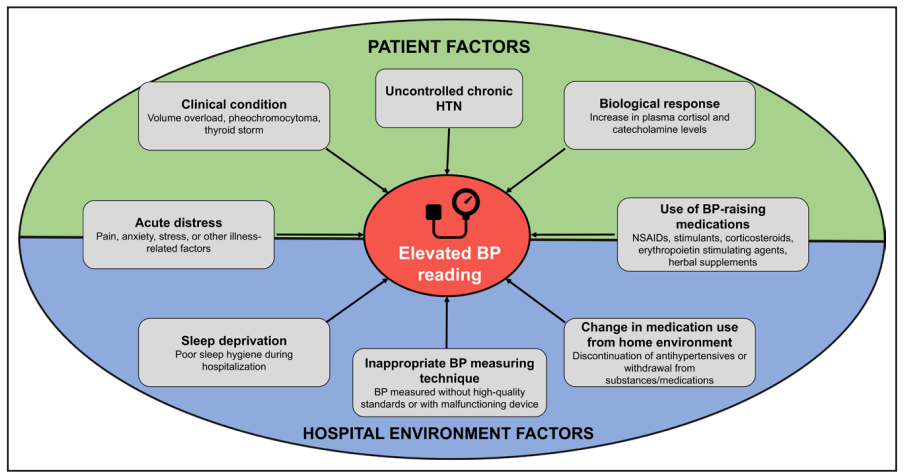
Mechanisms for elevated BP in the acute care setting.
General Approach
Management involves:
Accurate BP measurement and reassessment.
Evaluating for target-organ damage.
Identifying and addressing underlying causes.
Careful decision-making regarding antihypertensive treatment, considering risks and benefits
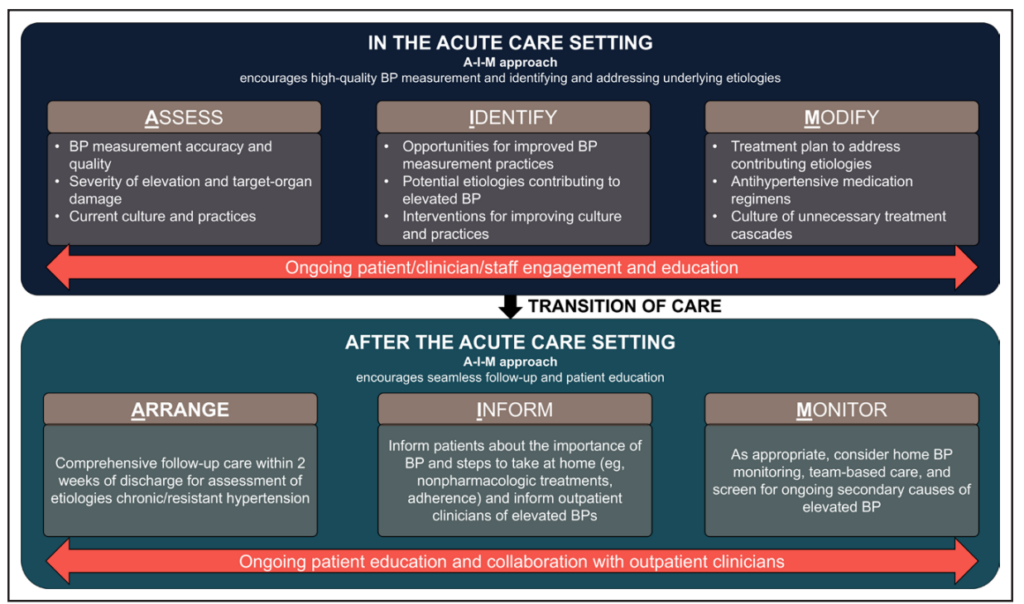
The A-I-M framework is suggested:
In-hospital: Assess, Identify, Modify.
Post-discharge: Arrange, Inform, Monitor.
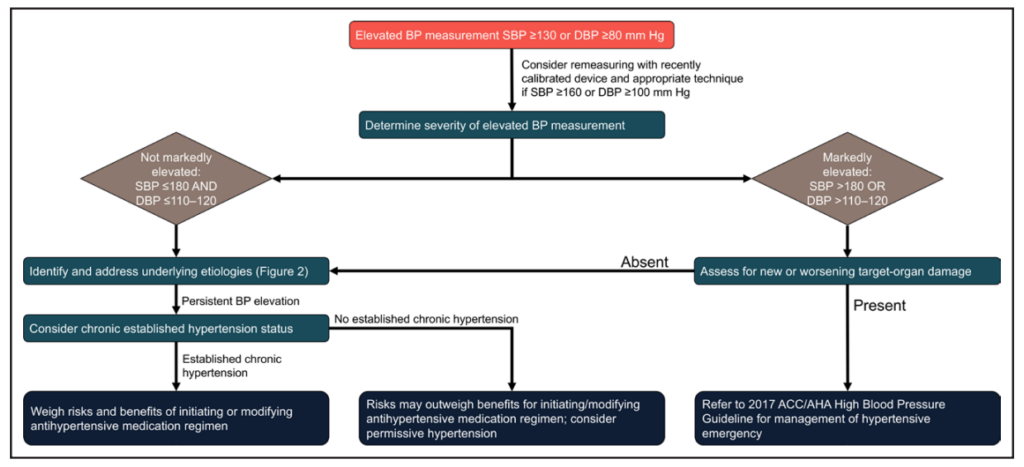
Approach to the acute management of elevated BP in the acute care setting.
Hypertensive Emergency
Defined by markedly elevated BP with evidence of new or worsening target-organ damage.
Key areas to evaluate: Brain, Arteries, Retina, Kidneys, Heart (BARKH).
Steps include:
Detailed history (e.g., chronic hypertension, adherence to medications).
Comprehensive physical examination.
Investigations like metabolic panels, ECG, chest X-ray, and volume assessment.
Treatment follows the 2017 Hypertension Clinical Practice Guidelines, often involving prompt initiation of antihypertensives.
Asymptomatic Elevated Inpatient BP
More common than hypertensive emergency, with unclear treatment guidelines.
PRN orders for intravenous antihypertensives are discouraged due to risks, including:
BP fluctuations.
Morning hypotension delaying oral medications.
Increased BP variability.
Key Recommendations:
Verify measurement accuracy: Ensure proper technique and device calibration.
 ramfit.mediverse@gmail.com